Flow Sensors
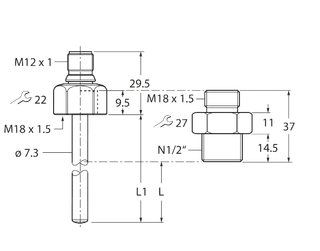
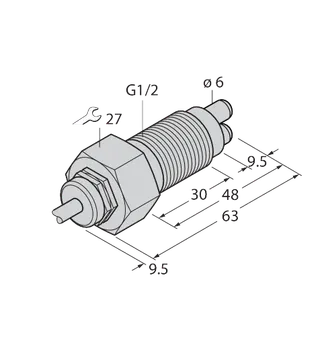
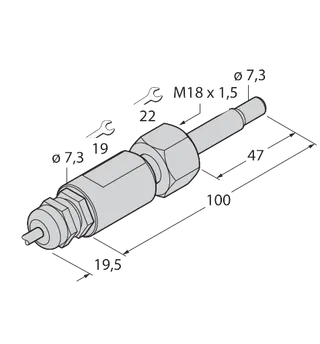
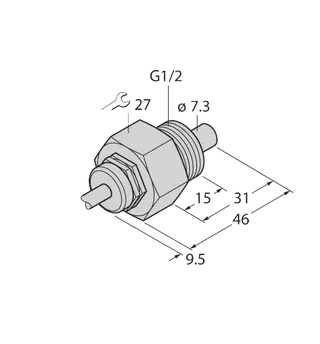
Flow sensors detect liquid or gaseous media in pipes and channels, mostly via calorimetric immersion probes that compare a heated element against the medium temperature. Typical use is monitoring coolant, lubricant, and compressed-air lines in machine tools, hydraulics, and process plants. Output is either a switching signal or a continuous flow value paired with medium temperature.
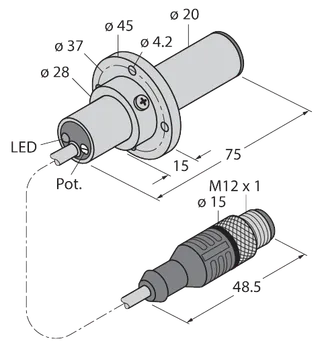
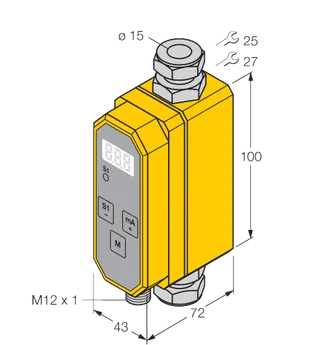
Construction splits into immersion probes without integrated electronics and matched evaluation units, including versions for transistor switching outputs, current outputs, and relay outputs. Manufacturers in stock include Turck and IPF, the latter covering FP-series probes for IO-Link device operation.
Supply ranges cluster around 21.6 …26.4 VDC, 18 …26.4 VDC, and wide-input 12 …26.4 VDC. Switching currents are either 100 mA or 150 mA.
Ambient ratings dominate at -20 …+70 °C and 0 …+70 °C, with extended versions to -25 …+70 °C. On the medium side, -25 …+85 °C is the most common window, with -20 …+85 °C and 0 …+85 °C covering warmer process media.
Cable variants are mostly 2 m, with 5 m and 10 m for longer runs to the cabinet. Special versions include IO-Link device probes of the FP series, non-Ex evaluation units with relay or current outputs, and a price spread covering entry-level units around 225.70 EUR up to systems near 1234.20 EUR.