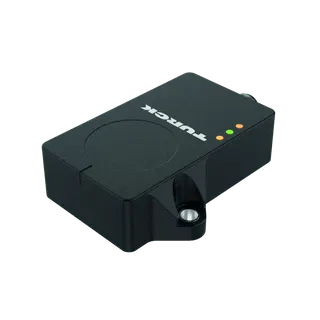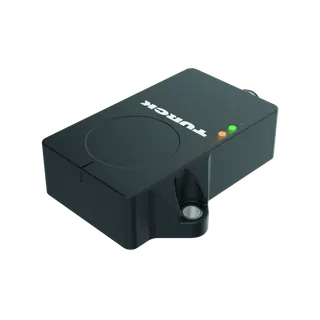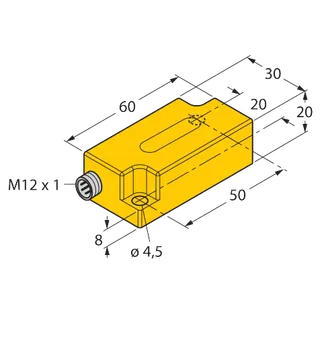
Tilt Sensors
Tilt sensors measure angular deviation from a reference axis (gravity or a defined zero) using MEMS or electrolytic sensing elements. They output either a switching signal at configurable thresholds or a continuous analog value proportional to the inclination angle. Typical use is on mobile machinery, crane booms, solar trackers, platform leveling, and rollover protection.
The assortment splits into static and dynamic variants. Static models cover slow leveling tasks; dynamic versions add filtering for vibrating or moving carriers. Output-wise, switching types sit alongside analog units, with several configurations from Turck and IPF.
Measurement ranges are dual-axis or single-axis. Frequent options are 0 …360°, -45 …360°, -60 …360°, -85 …360°, and the narrow -10 …360° variant for limited-travel mountings.
Operating temperature follows two main brackets: -40 …+85 °C for outdoor and mobile installations, -30 …+85 °C for industrial use, plus a smaller -25 …+85 °C group. Pricing tiers cluster at 195 EUR, 269 EUR, 319.20 EUR, and 345 EUR.
Connection and protection are dominated by M12 connector versions and housings rated IP67. Dynamic variants with internal filtering are available for installations subject to shock and vibration, alongside switching units with adjustable thresholds for limit monitoring.